How to Start a Roofing Business in 2026 (Step by Step)

Ugo Charles
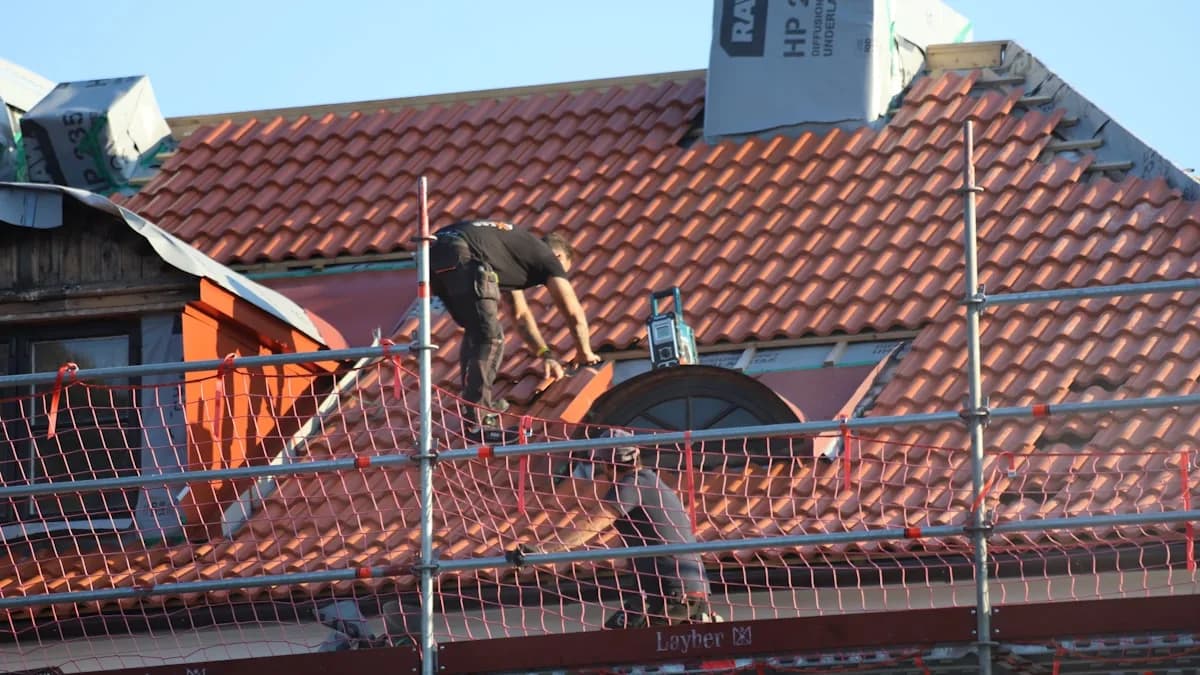
A hailstorm rolls through a subdivision on a Tuesday afternoon. By Saturday, six trucks are parked on that street, and four of them belong to crews that drove in from two states away. The roofer who lives twelve minutes from those houses, knows the building inspector by name, and answers his phone on the first ring should win every one of those jobs. Often he does not, because he never set the business up to capture the work.
Roofing is one of the few trades where a motivated operator can clear six figures in a strong year and where one uninsured fall can end the company in an afternoon. The gap between those two outcomes is not talent on a roof. It is licensing, insurance, pricing, and the systems that turn a storm into booked revenue instead of chaos.
This guide walks the whole thing for the US in 2026. The licensing rules that change every time you cross a state line, the insurance roofers genuinely cannot skip, what it actually costs to launch, how to price per square, and how to get your first ten jobs without burning cash on bad leads.
Is Roofing a Good Business to Start in 2026?
Yes, if you respect the numbers as much as the work. There are roughly 108,598 roofing contractor businesses operating in the US as of 2026, up about 2.6% year over year. The sector is projected to grow around 2% annually through 2032, with roughly 12,000 new roofer positions opening each year.
The money is real when the business is run well. Industry cost-structure data shows roofing companies spend about 43% of revenue on materials and subcontractors and 26% on wages, which leaves room for a 30-40% gross margin on residential re-roofs and a 15-30% net margin once you account for overhead, marketing, and owner pay. That spread is wider than most trades, and it is entirely a function of pricing and job costing, not how fast your crew can strip a roof.
The catch is seasonality and storm dependence. Roofing demand spikes after wind and hail events and in the dry stretch of summer and fall, then thins out in deep winter and wet spring. A roofer who builds the business only around storm chasing rides a rollercoaster. A roofer who pairs storm work with steady retail re-roofs, repairs, and referrals smooths the curve.
The single biggest predictor of whether a new roofing company survives year two is not how good the crew is. It is whether the owner priced jobs to actually make margin and tracked which ones did.
So demand is not your problem. Pricing, insurance, and turning leads into scheduled jobs are.
Roofing Licensing and Registration: It Changes by State
There is no national roofing license. Rules are set at the state level, and in many states the real authority sits with the city or county. You have to check three layers: your state contractor board, your local building department, and any voluntary state roofing association that commercial general contractors expect you to belong to.
Three patterns show up across the country:
- Some states license roofing as its own specialty trade with an exam and a bond.
- Some fold roofing under a general or residential contractor license above a dollar threshold.
- Some have no state roofing license but require local registration, permits, and proof of insurance per job.
States that require a state roofing or contractor license
These states regulate roofing at the state level, usually with an exam, insurance proof, and a surety bond. The bond amounts below come from surety and industry sources.
| State | License | Bond requirement | |---|---|---| | California | C-39 Roofing Contractor (CSLB) | $15,000 license bond | | Florida | Certified or Registered Roofing Contractor (DBPR) | $5,000 license bond | | Minnesota | Residential building contractor / specialty | $15,000 license bond | | Illinois | State roofing contractor license | $10,000 license bond | | Oklahoma | Construction Industries Board roofing license | $5,000 surety bond | | Arizona | ROC specialty or general (projects over $1,000) | Varies by class |
California is the strictest of the common starting points. The C-39 Roofing Contractor license through the Contractors State License Board requires four years of journey-level experience, a trade exam plus a business and law exam, fingerprinting, the $15,000 bond, and proof of workers' comp if you have employees.
Texas and the local-rules states
Texas is the one that trips people up. There is no mandatory state roofing license in Texas. Roofing is regulated by individual cities, and the Roofing Contractors Association of Texas runs a voluntary license that requires two years in business and proof of insurance. In Texas jurisdictions that do run a roofing licensing program, surety guidance notes license bond requirements running as high as $100,000, so the "no license" headline hides real local cost.
Colorado, Ohio, and Georgia work similarly. None issues a statewide roofing license, but cities and counties do. In Ohio you might need separate roofing licenses to work in Columbus, Cleveland, and Cincinnati. In Georgia, roofers operate under general contractor and local business rules, and the state roofing association runs a voluntary program that requires liability insurance, workers' comp, and often a bond to join.
The universal move: before you spend a dollar on a truck, call your state contractor board and your local building department, and ask exactly what a roofing contractor needs to pull a permit in your area. Get it in writing.
This is the same patchwork that trips up every trade. We mapped it in detail for HVAC in our guide to starting an HVAC business and again for the lighter-licensing path in our guide to starting a painting business, and the logic transfers directly to roofing: licensing is the longest-lead item, so start it first.
Insurance and Bonding: The Part Roofers Cannot Skip
Roofing is one of the most heavily underwritten trades in the country, and for good reason. Crews work at height, drop debris, and cut into the one part of a house that keeps water out. Insurers price that risk accordingly, and so do the commercial clients who will not let an uninsured roofer near their property.
Here is what a small roofing operation actually carries.
General liability
This covers third-party property damage and bodily injury. A tear-off tarp fails and rain ruins a customer's drywall. A bundle of shingles slides off the roof and dents a parked car. Commercial clients and general contractors typically demand $1,000,000 per occurrence and $2,000,000 aggregate minimum limits. For a small roofing crew, general liability commonly runs $4,000 to $10,000+ per year, noticeably higher than lower-risk trades.
Workers' compensation
Required by law once you have employees in nearly every state, and roofing is one of the highest-rated classes in the workers' comp system because of fall risk. The premium is payroll-based, so it scales with your crew. Many state contractor boards require proof of workers' comp as part of licensing, and most commercial general contractors will not hire you without it regardless of state law.
The rest of the stack
- Commercial auto for the trucks, trailers, and dump trailers that haul crews and material.
- Inland marine to cover nail guns, compressors, harnesses, and ladders on and off the job site.
- Umbrella or excess liability to stack above your GL and auto when a commercial or multi-family job demands higher limits.
Warning: Do not buy a single annual job's worth of "general liability" and call it covered. A roofing GL policy that excludes height work or specific roof types is worse than useless, because you find out at claim time. Have an agent who writes roofing specifically read the exclusions.
Bonding
Bonds are not insurance. A license bond guarantees you will follow the law and your contracts, and if the surety pays a claim, you have to pay the surety back. Many states fold a license bond into roofing licensing, ranging from $5,000 in Florida and Oklahoma to $15,000 in California and up to $100,000 in some Texas jurisdictions. Most roofers with decent credit pay only 1-5% of the bond amount per year, not the full face value, so a $15,000 bond might cost a few hundred dollars annually.
What It Costs to Start a Roofing Business
The honest range depends entirely on whether you launch as a solo owner-operator doing repairs and small re-roofs or as a small crew chasing full replacements from day one.
| Setup | Total startup cost (USD) | |---|---| | Solo owner-operator | $21,000 - $40,000 | | Small crew (1-2 crews) | $78,000 - $170,000 |
A solo launch covers a used pickup, ladders, harnesses, a couple of nail guns and a compressor, tear-off tools, tarps, a magnetic sweeper for nails, insurance down payments, registration, and a basic website. A small-crew launch adds a second truck and a dump trailer, full fall-protection gear for multiple roofers, heavier insurance deposits, payroll float, and a real marketing budget.
Here is where the money goes in a typical solo startup.
| Category | Low end | High end | |---|---|---| | Used truck | $7,000 | $20,000 | | Dump trailer or debris solution | $2,000 | $8,000 | | Ladders, harnesses, fall protection | $1,500 | $4,000 | | Nail guns, compressor, tear-off tools | $1,500 | $4,000 | | General liability (Year 1) | $4,000 | $10,000 | | Workers' comp deposit (if hiring) | $1,000 | $5,000 | | Licensing and bond fees | $300 | $2,500 | | Branding, website, yard signs | $500 | $3,000 | | Software (scheduling, CRM, estimating) | $0 | $500 | | Working capital (3 months) | $3,000 | $10,000 |
Sources: a 2026 roofing startup cost model and industry insurance ranges referenced in our research notes.
A few stances on spending. Buy a reliable used truck rather than leasing, because you will put hard miles on it and most leases penalize that. Rent the equipment you only need occasionally, like a lift or a specialty coating sprayer, until you have steady demand for that work. But buy your own safety gear and buy it good. Harnesses and anchors are the last place to save money on a roof.
How to Price Roofing Jobs Per Square
Roofing is priced per square, where one square equals 100 square feet of roof area. A 2,000-square-foot roof is 20 squares before you account for waste, pitch, and complexity.
Typical 2026 per-square ranges for an asphalt shingle re-roof:
| Market type | Price per square | |---|---| | Lower-cost / smaller markets | $275 - $350 | | Average suburban markets | $350 - $500 | | High-cost metro / coastal | $500 - $700+ |
Those numbers swing on real factors: how many existing layers you tear off, roof pitch and complexity (valleys, dormers, two stories), shingle grade from 3-tab to architectural to designer, access and dump fees, and local labor cost.
The mistake nearly every new roofer makes is pricing off what the competition charges instead of what the job costs. Build a simple job-costing model for every quote: materials (shingles, underlayment, flashing, accessories), labor with payroll burden, an honest slice of overhead (insurance, trucks, marketing), and your target margin on top. Aim for that 30-40% gross margin. If your gut says a number feels "fair," it is almost certainly too low.
The field service math that separates busy from profitable applies directly here. A roofer running five tear-offs a week who is still short on bills does not have a volume problem. He has a pricing problem.
Retail vs Insurance and Storm Work
Roofing revenue comes from two streams, and you want both.
Retail work is the homeowner paying you directly, whether cash, card, or financing. It is steadier, lower-pressure, and the pricing is fully under your control. It comes from aging roofs, home sales that flag roof issues on inspection, and referrals. Build your long-term business on this.
Insurance and storm work is the homeowner's insurer paying out a claim for hail or wind damage. It can be very profitable in the hail belt, but it runs on the carrier's approved scope, usually priced through Xactimate rather than your retail sheet. You inspect and document the damage, help the homeowner file (without crossing into acting as a public adjuster where that is prohibited), meet the adjuster, and contract off the approved claim plus allowed supplements.
Storm work accelerates growth in a big hail year, but it is cyclical and crowded with out-of-town chasers. The roofer who also invests in retail marketing and referrals does not panic when the sky stays calm for two seasons.
The regulatory line matters here. Several states restrict how roofers can negotiate with insurers or discuss waiving deductibles. Know your state's rules before you build a storm-work pitch, because getting this wrong is how a fast-growing roofing company catches a complaint.
How to Get Your First Roofing Customers
You have the license, the truck, and the insurance. Now you need the phone to ring.
Your early channels, roughly in order of speed:
- Storm canvassing. After a hail or wind event, walk the affected neighborhood, offer free inspections, show photos of recent nearby work, and leave branded door hangers and yard signs where allowed. Still one of the fastest paths from zero to ten jobs.
- Google Business Profile. Set it up and fully optimize it on day one. Accurate name, address, and phone, roofing-specific categories, your service area, and project photos. Ask every satisfied customer for a review. "Roofer near me" is high-intent, and reviews move you into the map pack fast.
- Google Local Services Ads. The "Google Guaranteed" badge is powerful once you have license, insurance, and a background check in place.
- Manufacturer programs. GAF Master Elite and Owens Corning Preferred supply co-branded materials, warranty leverage that closes deals, and sometimes leads.
- Referral relationships. Real estate agents, home inspectors, and property managers all need a fast, fair roofer on speed dial. Win one good property manager and you have steady repair volume.
Pick one primary service area with good demographics and density and dominate it before you spread out. A roofer known in three zip codes beats a roofer thinly spread across a county.
The thread through all of it is follow-up. A free-inspection lead that nobody calls back is a job your competitor books. Which is exactly where systems come in.
Run the Business: Where Roofing Software Fits
When you are doing two inspections and a tear-off in a day, it is tempting to run the whole operation from your head and a notepad. That works until the storm hits and you have forty inspection leads, a dozen pending estimates, three crews to schedule, and a stack of insurance paperwork. That is the week disorganization costs you real money.
You need a system in place before that week, not after it. The core pieces for a roofing business are job scheduling, a customer record with the property and roof details, estimates the homeowner can act on, photo documentation of damage and completed work, and invoicing.
Start with Fieldtics. The free tier gives you unlimited clients, job scheduling, a customer CRM, and mobile-friendly web access, with no credit card required, which is enough to run your first several months organized from job number one. When you are ready for estimates, invoices and payment-status tracking, and team scheduling, the Professional tier is $29 per month.
The photo documentation matters more in roofing than almost any trade. Before-and-after photos tied to the customer record back up your insurance scope, settle warranty questions, and become the marketing content that earns the next job. If you want the deeper rundown on choosing tools, our guide to the best field service management software for small businesses compares the options, and the roofing contractor software page shows how the pieces fit a roofing workflow specifically.
The point is not expensive software on day one. The point is that a free tool covering scheduling and customer records removes every excuse to start disorganized, and disorganized is what loses jobs after a storm.
Frequently Asked Questions
Do you need a license to start a roofing business?
It depends on your state. California, Florida, Illinois, Minnesota, Oklahoma, and Arizona require a state roofing or contractor license with exams and a bond. Texas, Colorado, Ohio, and Georgia have no statewide roofing license but regulate roofers through city and county rules. Always check your state board and local building department before you start.
How much does it cost to start a roofing business?
A solo roofing startup typically runs $21,000 to $40,000 to cover a used truck, ladders, safety gear, nail guns, insurance down payments, licensing, and basic marketing. Launching with a small crew and dedicated trucks pushes the range to roughly $78,000 to $170,000 in the first year.
How much do roofing businesses make?
Well-run roofing companies target a 30-40% gross margin on residential re-roofs and a 15-30% net margin after overhead, marketing, and owner pay. Actual owner income depends on revenue volume and how disciplined the pricing and job costing are. Underpricing, not low demand, is what kills margin.
What insurance do roofers need?
At minimum, general liability at $1,000,000 per occurrence and $2,000,000 aggregate, plus workers' compensation once you have employees, since roofing is one of the highest-rated comp classes. Most roofers also carry commercial auto and inland marine for tools, and add umbrella coverage for large commercial jobs.
Is insurance and storm work worth it for a new roofer?
Storm and insurance work can be highly profitable in hail-prone regions, but it is cyclical and crowded with out-of-town crews. It runs on the insurer's approved scope, usually priced through Xactimate. The most stable roofing businesses pair storm work with steady retail re-roofs and referrals so a calm season does not sink them.
The Bottom Line
The roofer twelve minutes from that hail-struck subdivision should win every job on the street. Whether he does comes down to the boring decisions made long before the storm: the right license for his state, insurance that actually covers a fall and a flooded ceiling, prices built from job costs instead of guesswork, and a system that turns forty inspection leads into booked work instead of a pile of forgotten phone numbers.
Roofing rewards operators who treat the business with the same care they give the flashing around a chimney. Get the licensing started this week because it is the slowest piece, line up an agent who writes roofing insurance specifically, and price your first jobs to make margin rather than to win on cheapness.
Before your first inspection turns into a scheduling scramble, set up Fieldtics for free. The free tier covers scheduling, your customer CRM, and mobile-friendly web access, so there is zero cost to start organized and zero reason to wait for the busy season to get your house in order.