How to Start a Handyman Business in 2026 (Step by Step)

Ugo Charles
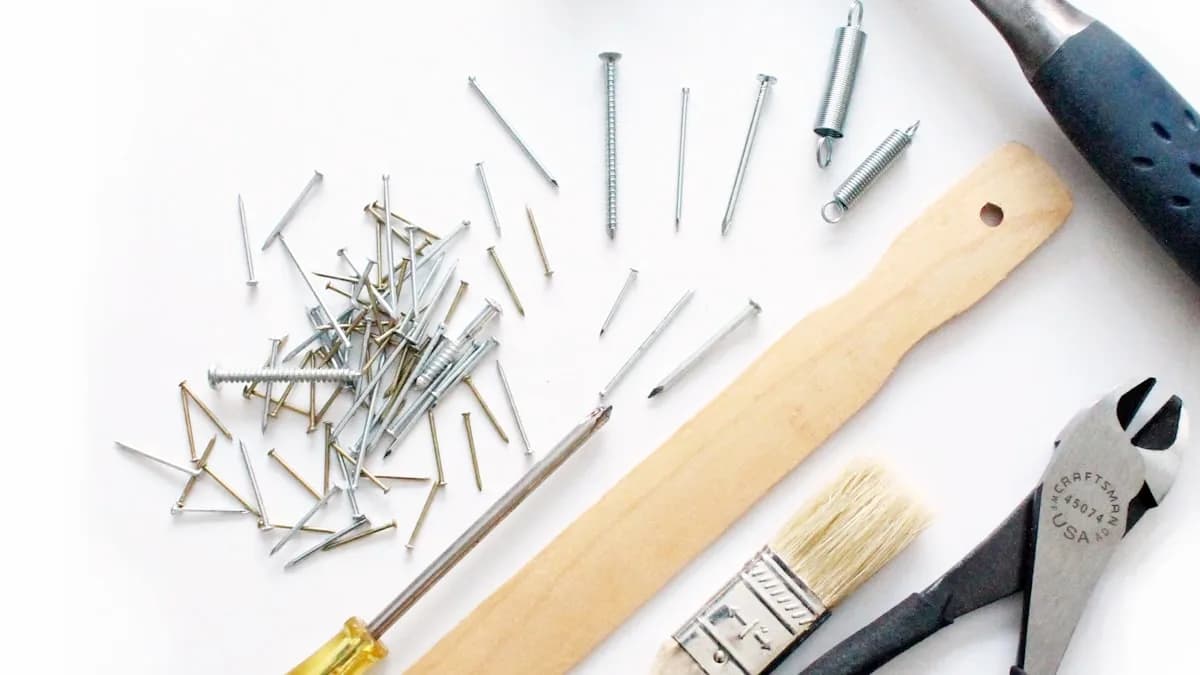
A homeowner two streets over wants their kitchen faucet swapped, three TVs mounted, a sticking back door planed, and the deck railing tightened before a barbecue. None of it needs a permit. None of it needs a plumber or an electrician. All of it pays cash by Friday. That pile of small, unglamorous jobs is the entire business case for going out on your own as a handyman.
The catch is that the line between "handyman work" and "contractor work" is drawn by your state, not by you, and crossing it without a license is how a good side income turns into a fine. Get that line right and the rest of starting up is genuinely simple. You do not need a degree, a shop, or a five-figure tool budget.
This guide walks the real steps in order: whether the business is worth starting, the license question that trips up most new handymen, how to register and insure, what it actually costs, how to price, and how to get the first jobs on the calendar. The numbers are US figures for 2026.
Is a Handyman Business Worth Starting in 2026?
Yes, for one specific reason: demand for small home repairs keeps growing while the supply of people willing to do them keeps shrinking. Homeowners want one reliable person for the jobs that are too small for a contractor to bother with and too annoying to do themselves.
The barrier to entry is low in the literal sense. A focused service list and a basic tool kit get you to your first paid job, and a profitable launch commonly runs $2,000 to $6,000 depending on what tools and vehicle you already own. Compare that to the $30,000-plus an HVAC or plumbing startup needs and the appeal is obvious. Other low-overhead service trades like starting a pest control business sit in a similar range, so handyman work is not the only cheap way in, but it is the most flexible.
The income ceiling is higher than most people assume. The US Bureau of Labor Statistics puts the median wage for general maintenance and repair workers at $48,620 as of May 2024, but that figure is for employees punching a clock. A self-employed handyman billing $60 to $70 an hour and keeping the schedule full earns considerably more than the staff number. The gap between those two figures is the whole reason to work for yourself.
Reality check: "low barrier" does not mean "guaranteed." The handymen who fold underprice their work and treat every job as a one-off instead of building a base of repeat clients. The ones who last solve both problems early.
The flexibility is real too. You set the hours, pick the work you take, and scale at your own pace from a one-truck operation to a small crew. That control is exactly why the trade attracts people leaving a W-2 job, and why it is worth taking the setup seriously.
The Handyman License Question (and Where the Line Sits)
This is the section that matters most, so read it twice. There is no national handyman license. Whether you need one comes down to your state's rules, and most states draw the line at a dollar amount per job, a permit requirement, or a specific trade.
The dollar-threshold rule. Many states let you do repair and improvement work without a contractor license as long as a single job stays under a set total, counting both labor and materials. California is the most-cited example: under AB 2622, as of January 1, 2025 the unlicensed cap rose to $1,000 per job, and the exemption only holds if the work needs no building permit and you do not hire helpers. Florida uses a similar single-job threshold around $1,000. Cross the number on a job and you legally need a contractor license for that work.
The no-state-license states. Texas and Colorado are commonly summarized as having no state-level handyman license requirement, though city and county rules can still apply. Illinois has no simple statewide exemption number either, so local registration and trade laws drive what you can do there.
The practical rule is the same everywhere: if a job is over your state's threshold, needs a permit, or touches a licensed trade like plumbing, electrical, or HVAC, you need the proper license or you need to pass that job to someone who has one.
What You Can Usually Do Without a Contractor License
Lower-risk, non-structural work is commonly allowed when it stays under your state's cap and triggers no permit. A typical safe service list:
- Interior and exterior painting
- Drywall patching and minor repair
- Minor carpentry and trim work
- Replacing door hardware, locks, and weatherstripping
- Furniture assembly
- Mounting shelves, TVs, and cabinets
- Caulking around tubs, sinks, and windows
- Gutter cleaning and basic exterior maintenance
- Minor fixture swaps where local law allows it
A handful of these pay better when you quote from a real materials count instead of a gut number. Patching a full wall of drywall, for example, is easier to price once a drywall calculator tells you the sheets and mud you will actually buy.
What Usually Crosses the Line
These need a specialty license, a permit, or both. Refer them out or get licensed:
- Major plumbing (re-piping, water heater installs in most areas)
- Electrical rewiring or panel work
- HVAC system work
- Structural changes to the building
- Any remodel that pulls a permit
- Any single job that exceeds your state's dollar cap
Warning: The threshold counts labor plus materials, not just your fee. A "$400 labor" job with $700 in materials is an $1,100 job in the eyes of a state with a $1,000 cap. Quote the full number against your state's line. For material-heavy work like setting fence posts or pouring a small pad, a concrete calculator gives you the bag count and cost before you quote.
Because the rules change at the state line, confirm yours before you take a dime. Your state contractor licensing board's website is the source of truth, not a forum post.
Register the Business and Get Insured
Even when the work itself needs no contractor license, you should still set up a real business. It protects your personal assets, makes you look legitimate to property managers, and keeps taxes clean.
The standard setup is short:
- Form an LLC or operate as a sole proprietorship. An LLC is the usual pick because it separates your house and savings from a business lawsuit, and it costs as little as $50 to a few hundred dollars to file in most states.
- Get an EIN from the IRS for free. Do this before opening accounts.
- Open a business bank account so personal and business money never mix.
- File a DBA if you operate under a name other than your own.
- Check whether your city requires a local business license or home occupation permit.
The one line item you do not skip is general liability insurance. You are working inside people's homes, where one slip with a ladder or a nicked water line becomes a property-damage claim.
A standard $1 million per occurrence / $2 million aggregate policy averages about $219 a month, or $2,625 a year nationally, though a lean solo operator in a low-risk market may pay closer to $600 to $800 a year. The moment you hire even one helper, look into workers' compensation as well, since many states require it.
Tip: Many property managers and repeat clients will ask for a certificate of insurance before they hire you. Having general liability in place is not just protection, it is a sales tool that gets you the steadier work.
What It Actually Costs to Start (US, 2026)
A handyman business is one of the cheapest service businesses to launch because you can start with a tight service list and the tools you already own. A profitable start commonly lands between $2,000 and $6,000.
| Startup item | Low end (USD) | High end (USD) | |---|---|---| | LLC formation and registration | $50 | $500 | | General liability insurance (year 1) | $600 | $2,625 | | Tools and equipment | $500 | $3,000 | | Vehicle setup (rack, ladder, signage) | $200 | $2,000 | | Website, phone line, email | $100 | $800 | | Marketing and business software | $0 | $500 | | Total | ~$1,450 | ~$9,425 |
Sources: Handyman Startup and MoneyGeek insurance data.
The biggest swing factor is what you already have. If your truck is paid off and your tool bag is full, you can be working for the price of an LLC filing and an insurance binder. If you are buying tools and a vehicle setup from scratch, the budget climbs fast. Either way, this is a business you can fund out of pocket without a loan, which is rare and worth taking advantage of.
One number to plan for that does not show up in a startup table: working capital. Set aside a month or two of personal expenses so you are not forced to take bad jobs at bad prices in week three.
How to Price: Hourly vs. Per-Job
Handymen price two ways, and you will use both. Hourly is simpler for small repairs and unknown-scope work. Per-job (flat-rate) is better for clear, repeatable tasks because customers prefer a fixed total and you keep the upside when you work fast. For a bigger carpentry job like rebuilding a section of deck, price it from a deck material calculator so the flat number covers every board and fastener.
Typical handyman hourly rates run $50 to $150 an hour, with many jobs clustering around $60 to $70 nationally and higher metro markets supporting the top of that range. Do not anchor to what feels "fair." Anchor to what covers your real costs and leaves a profit.
A straightforward way to set your floor:
Hourly rate = (annual expenses + the income you want) ÷ billable hours
Run the numbers honestly. If you want to take home $60,000, carry $20,000 in annual expenses, and can realistically bill 1,500 hours in a year, your break-even floor is about $53 an hour before taxes. That is your minimum, not your rate. Price above it.
The mistake new handymen make is forgetting that not every working hour is a billable hour. Driving, quoting, buying materials, and chasing payment all eat the day. Bill 1,500 hours and you are probably working 2,000-plus. Price for the gap or you will be busy and broke.
For repeat tasks like a standard TV mount or a faucet swap, build a flat price you can quote on the spot. Customers say yes faster to "$140 to mount and conceal the cables" than to "somewhere between two and three hours at $65." Flat-rate also rewards you for getting good. Once a job that took two hours takes you 50 minutes, the flat price stays the same and your effective rate climbs. The same logic holds for a tile backsplash, where a tile calculator turns the wall dimensions into the boxes of tile and thinset your flat price has to cover.
How to Get Your First Customers
Your first jobs come from local trust signals and direct outreach, not from a big ad budget. Spend your energy where homeowners actually look for a handyman.
- Claim your Google Business Profile. It is free and it is how local customers find you in 2026. Fill out every field, add photos of your work and your face, and set your service area.
- Build a one-page website with online booking. It does not need to be fancy. It needs your services, your service area, and a way to book or request a quote without a phone tag.
- Ask for a review after every job. A handful of recent five-star reviews moves you up the local map results faster than anything else you can do for free.
- Tell your existing network. Friends, neighbors, your barber, the parents at your kid's school. The first 10 to 20 jobs almost always come from people who already trust you.
- Network with property managers. Win one small property management company and you have a steady stream of small repairs instead of one-off jobs.
- Post in neighborhood groups. Local Facebook groups and neighborhood apps are where "does anyone know a good handyman?" gets asked every week.
Tip: Start with four or five high-demand services rather than advertising that you do everything. "Furniture assembly, TV mounting, drywall patching, door repair, and caulking" is easier to sell, easier to price, and keeps you well clear of the licensed-trade line. If you add flooring to that menu, a flooring calculator turns a room measurement into a materials number you can quote on the spot.
The real money in this business is not the first job, it is the second, third, and tenth from the same client. A homeowner with a punch list never runs out of small repairs. Be the person who shows up on time, charges a fair flat rate, and cleans up, and you become their default call for years. Repeat clients and their referrals are what turn a handyman side gig into a full schedule.
Run the Business Without Drowning in Admin
The work is the easy part. What sinks new handymen is the paperwork around it: the quote you forgot to send, the appointment you double-booked, the invoice still sitting in your head two weeks after the job. For a solo operator, the admin is the bottleneck, and a notebook stops working the moment you have more than a handful of clients.
This is exactly the gap field service software fills, and you do not need an enterprise tool to do it. Our recommendation is Fieldtics, which is built for solo operators and small crews rather than 20-truck companies. The free tier covers unlimited clients, job scheduling, a customer CRM, and mobile-friendly web access with no credit card required, which is plenty to run your first several months. Our handyman business software is free when you are solo and scales when you add a helper.
When you are ready to send quotes on site, invoice from the truck, and track invoice status, the Professional tier is $29 a month and adds quotes and estimates, invoices and payment-status tracking, team scheduling, and customer messages. Getting paid the day you finish, instead of weeks later, is the difference between a handyman business that has cash and one that is always waiting on it.
If you want the full picture of what to look for, our guide to the best field service management software for small businesses compares the options, and the rundown of the best invoicing apps for contractors covers the get-paid side specifically. The point is not that you need expensive software on day one. The point is that you need a system on day one, and a free one removes every excuse to start disorganized.
Thinking about a related trade or a specialty alongside handyman work? The same playbook applies to starting a painting business and, if you go the licensed route, starting an HVAC business. If you would rather specialize than stay general, a focused trade like starting a roofing business follows the same first-job-to-full-schedule arc. The license thresholds and the operations are different, but the path from first job to full schedule rhymes.
Frequently Asked Questions
Do I need a license to start a handyman business?
It depends on your state and the size of the job. Many states let you do repairs without a contractor license as long as each job stays under a dollar cap (for example, California's $1,000 limit under AB 2622), needs no permit, and does not involve licensed trades like plumbing or electrical. Always confirm with your state licensing board.
How much does it cost to start a handyman business?
A profitable start typically runs $2,000 to $6,000 in the US, covering LLC formation, general liability insurance, tools, basic vehicle setup, and a simple website. If you already own a truck and tools, you can launch for the cost of registration and an insurance policy, often under $1,500.
How much do handymen make?
Self-employed handymen commonly bill $50 to $150 an hour, with many around $60 to $70. A solo handyman who keeps the schedule full earns well above the BLS median of $48,620 for general maintenance and repair employees, since that figure reflects hourly wage workers rather than business owners.
What work can a handyman do without a contractor license?
Lower-risk, non-structural tasks under your state's cap: painting, drywall patching, minor carpentry, furniture assembly, mounting shelves and TVs, replacing door hardware, caulking, and gutter cleaning. Major plumbing, electrical rewiring, HVAC, structural changes, and permitted remodels require the proper license.
Should I charge hourly or per job?
Use both. Charge hourly for small or unknown-scope repairs, and set flat per-job prices for clear, repeatable tasks like TV mounts and faucet swaps. Flat rates close faster because customers prefer a fixed total, and they reward you with a higher effective rate as you get quicker at common jobs.
Pick the four or five services you do best, set a flat price for each, get general liability in place, and book your first job this week. The license question has a clear answer in your state, the startup cost fits in a checking account, and the first repeat client is usually one good job away.