How to Start a Cleaning Business in 2026: A Step-by-Step Guide

Ugo Charles
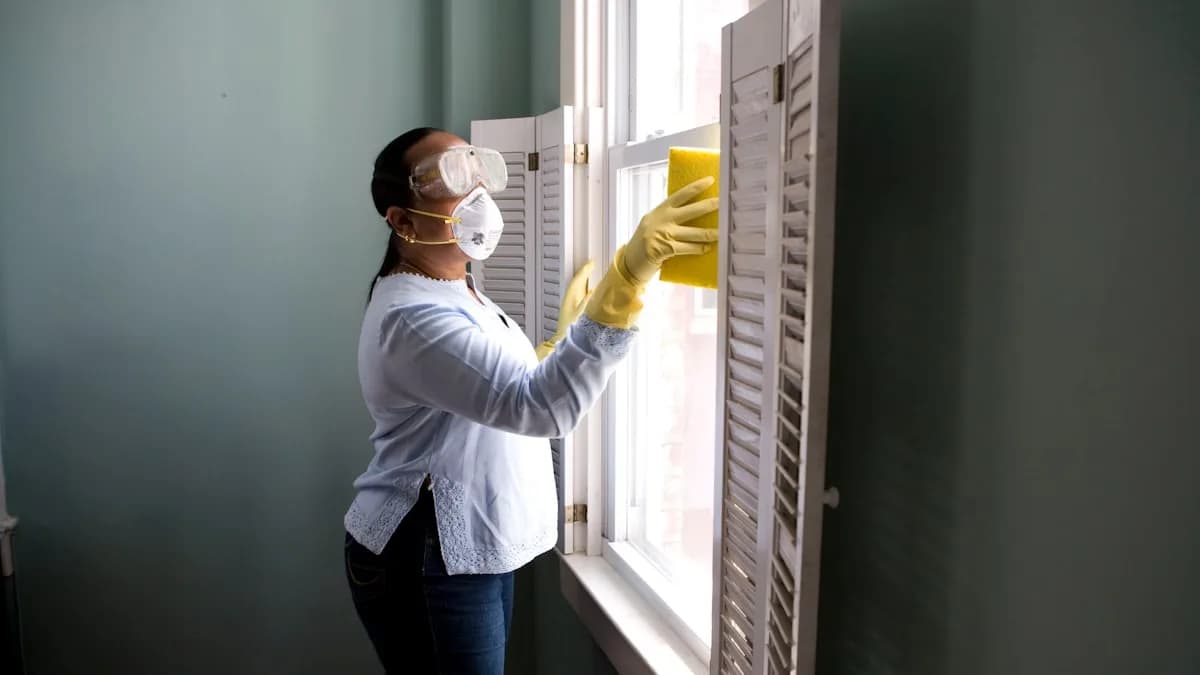
You can buy a vacuum, a mop, and a caddy of supplies this afternoon and clean a house tomorrow. What stops most people is the next question: do I actually need a license to do this legally, and what happens if I skip it? That gap, between wanting to start and not knowing the first real step, is where most cleaning businesses die before they bill a single client.
Here is the good news. A cleaning business is one of the cheapest legitimate businesses you can start in the US. A solo residential cleaner with a vehicle and basic supplies can be operational for as little as $500, and the licensing is far simpler than the contractor boards that gate HVAC or plumbing.
This guide takes you from zero to your first paying job: choosing a niche, registering and licensing the business, getting insured and bonded, budgeting realistic startup costs, setting prices that actually profit, and landing your first clients. Every number here is sourced, and the steps are in the order you should do them.
Is a Cleaning Business Worth Starting in 2026?
For an owner who controls overhead and keeps a tight route, yes. Cleaning businesses report annual revenue anywhere from about $24,000 to $250,000+ depending on size, niche, and market, with profit margins commonly in the 15% to 40% range. The numbers swing wide because the gap between a disorganized solo cleaner and a tight two-crew operation is enormous.
Owner take-home tracks how you grow. Early solo owners who do most of the cleaning themselves often draw $24,000 to $50,000+, especially in lower-cost markets. Established owners running small teams with stable recurring contracts can reach $60,000 to $100,000+ once they are managing crews instead of swinging a mop full-time.
A realistic 2-year goal for a serious new owner: build to $8,000 to $15,000 in monthly recurring revenue. That is enough to support a full-time owner draw while employing at least one part-time or full-time cleaner.
Residential vs commercial: the money difference
Residential is faster to start and faster to bill. You can land your first homes through your own network in a week, and most jobs are one-time or recurring weekly cleans with short sales cycles.
Commercial is slower to win but stickier once you do. Offices, clinics, and retail spaces sign recurring contracts, but they have longer sales cycles, often require proof of insurance and bonding, and sometimes run background checks on your staff. The trade is patience for predictability.
Most owners who plan to grow start residential to build cash and reviews, then layer in commercial accounts for the recurring base. You do not have to pick one forever, but pick one to launch.
Choose Your Niche Before You Register Anything
The single biggest pricing and marketing decision you make is what kind of cleaning you sell. It shapes your equipment, your insurance, your rates, and who you call for your first job.
- Residential cleaning. Recurring house cleans, one-time deep cleans, move-in/move-out. Lowest startup cost, fastest to first client.
- Commercial cleaning. Offices, retail, clinics, small warehouses. Recurring contracts, higher equipment cost, longer sales cycle.
- Specialty cleaning. Post-construction, medical/clinical, carpet and upholstery, vacation rentals. Higher rates, less competition, but often needs specific equipment or training.
You can serve more than one, but trying to be everything to everyone on day one is how new owners end up with a website nobody understands. Lead with one niche, get good at it, and add the second once the first is paying.
Tip: If you are choosing a specialty, pick one with recurring demand. A vacation-rental turnover clean or a weekly office contract pays you again next week. A one-time post-construction job does not.
Register and License Your Cleaning Business
This is the step people overthink and then skip. The process is more straightforward than the trades, but it has real parts you cannot ignore.
Pick a legal structure
Your two practical options as a new cleaner:
- Sole proprietorship. Easiest and cheapest. In many places you only need a local business license and a DBA if you are not using your own name. The problem: no liability separation, so your personal assets are exposed if a client sues.
- Single-member LLC. Separates personal and business liability, which matters when you are working inside other people's homes where slip-and-fall and property-damage claims are real risks. Formation runs roughly $50 to $200 in most states (Florida's LLC filing is $125), and it is taxed as a pass-through by default.
For a cleaning business specifically, the LLC is worth the modest fee. You are handling other people's property and entering their homes. The liability separation is the whole point.
Register the name and get your EIN
- File your LLC or corporation paperwork with your Secretary of State, usually online, and pay the state filing fee.
- File a DBA if you operate under a name different from your legal entity name. Costs vary by state (Florida's fictitious name registration is $50).
- Apply for an EIN from the IRS. It is free, takes minutes online, and you need it to open a business bank account and to hire.
- Open a business bank account the same day you form the entity. Mixing personal and business money is the fastest way to undermine your liability protection and create a tax-season mess.
Business license, zoning, and sales tax
Requirements vary heavily by city and state, but the pattern is consistent. Most cities or counties require a general business license, typically $50 to $400 depending on location. Nine states also require a state-level general business license for all businesses.
Two items new cleaners miss:
- Home-occupation permit. Most cleaning businesses run out of the owner's home. Your locality may require a home-occupation permit or zoning clearance. Check the city or county planning department.
- Sales tax on services. Whether cleaning is taxable depends entirely on your state. In Florida, for example, residential house cleaning is exempt but commercial cleaning is taxable, which means you need a sales tax permit for commercial work. Check your state's Department of Revenue for how it treats "janitorial/cleaning services."
Because the rules are this local, the one move that never fails: search your city government website for the business licensing section, then your state Department of Revenue for service tax treatment. Twenty minutes there saves you a penalty later.
Insurance and Bonding: What Clients Actually Require
Cleaning work means entering homes and businesses, handling chemicals, and operating equipment near other people's property. Coverage is not optional padding here. It is what lets you legally and credibly take the job.
The coverage you actually need
| Coverage | What it does | Typical cost | |---|---|---| | General liability | Covers property damage and injury to others (a broken vase, a client slip) | From ~$39/mo (~$425/yr) | | Workers' compensation | Covers employee injuries, required in most states once you hire | Varies by state and payroll | | Tools and equipment | Covers stolen or damaged gear | Add-on | | Commercial auto | Covers business vehicle use your personal policy excludes | Varies |
General liability is the floor. It runs around $39 per month to start for a small cleaning business, and it covers the two things most likely to go wrong: you break something in a client's home, or someone gets hurt because of your work. Get it before your first job, not after your first accident.
Workers' comp becomes mandatory in most states once you hire employees, often at the first one to three hires depending on state law. Budget for it the moment you bring on help.
Why bonding matters even when it is not required
A janitorial bond (a type of surety bond) protects the client if one of your cleaners steals from them. You are usually not legally required to carry one unless you are bidding government contracts. But here is why it still matters.
Residential clients read "licensed, bonded, and insured" as a trust signal, and many commercial accounts make bonding a flat condition of the contract.
For the cost of a small bond, you unlock higher-value commercial work and you reassure a homeowner who is about to hand a stranger a key to their house. It is one of the cheapest credibility purchases in the business.
Cleaning Business Startup Costs (Itemized for 2026)
The honest range for a US cleaning startup is wide because it depends on niche and whether you start solo. A solo residential cleaner with their own vehicle can launch for $500 to $5,000+. An independent commercial cleaning company typically runs $2,000 to $10,000. Industry sources peg the average cleaning startup around $3,500.
Here is where the money goes.
| Category | Low end (USD) | High end (USD) | |---|---|---| | State entity formation (LLC) | $50 | $200 | | DBA / fictitious name | $25 | $100 | | Local business license | $50 | $400 | | General liability insurance (Year 1) | $425 | $1,000 | | Equipment (residential) | $50 | $800 | | Equipment (commercial) | $100 | $3,300 | | Cleaning supplies | $200 | $1,000 | | Website and domain | $300 | $1,500 | | Vehicle signage / branding | $300 | $1,500 | | Scheduling and invoicing software | $0 | $100/mo | | Total (solo residential) | ~$500 | ~$5,000 |
Sources: Insurance Canopy, Janitorial Leads Pro, Demandium.
The way to stay at the low end: start solo, use your own vehicle, buy only essential equipment (vacuum, mops, microfiber cloths, chemicals, PPE), and use free marketing channels before you spend on ads. The software line is the easy one to zero out, which we will get to.
Warning: The temptation is to buy every piece of commercial equipment up front. Do not. Rent or skip anything you are not sure you will use weekly. A floor machine you use twice cost you a month of profit.
Set Your Prices So the Business Actually Profits
Underpricing is the number one way new cleaners stay busy and broke. The fix is to pick a model, build the rate from your real costs, and check it against local competitors before you quote.
The four pricing models
- Hourly. A flat rate per cleaner, commonly $30 to $70 per hour for residential and commercial. Best for deep cleans and unpredictable one-off jobs where you cannot estimate the time cleanly.
- Flat rate per job. A fixed quote based on size and condition. A standard apartment clean might run $80 to $120. Best for recurring residential where you know the home.
- Recurring package. A discounted rate for weekly, bi-weekly, or monthly service versus a one-time deep clean. This is how you build predictable revenue.
- Per square foot. Common in commercial, often $0.05 to $0.20+ depending on building type and frequency. Some residential cleaners use it too: a nickel per square foot for routine, a dime for deep.
Most residential cleaners run flat-rate-per-job for recurring clients and hourly for deep cleans. Most commercial cleaners run a fixed monthly contract built from a walkthrough.
Build the rate from your costs, not your gut
The mistake is copying your old employer's price and shaving 20% to "be competitive." Build it up instead:
- Start with your target hourly labor cost (your own draw, or wages if you hire).
- Add for payroll taxes and workers' comp if you have employees, plus insurance, supplies, travel, and admin time.
- Add a profit margin. Well-run cleaning businesses target 15% to 40% overall.
Then secret-shop five to ten local competitors. Get their quotes for a comparable job so you know you are profitable and competitive, not just cheap. A free house cleaning cost calculator gets you a defensible starting number fast, and our breakdown of house cleaning rates per hour shows the real per-hour, per-square-foot, and flat-rate bands to anchor against. The full math behind pricing a service job is not complicated, but you have to run the numbers instead of guessing. Your gut number is almost always too low.
Get Your First Cleaning Customers
You have the LLC, the insurance, and the supplies. Now you need a phone that rings. Early clients come from your network and hyper-local outreach long before paid ads make sense.
Residential: start with who you know
Your first 10 to 20 clients will almost certainly come from people you already know. Tell everyone you have started a cleaning company. Offer a free or discounted first clean to a few friends in exchange for honest feedback, photos, and a review. That is not begging. People need cleaners, and they would rather hire someone they trust.
Then build the free channels that compound:
- Set up a Google Business Profile. This is how people find "house cleaning near me," and it is free. Fill out every field, add photos, and ask every happy client for a review.
- Create a simple referral program. "Refer a friend, you both get 20% off your next clean" turns one good client into three.
- List on the marketplaces people search. Thumbtack, Angi, Nextdoor, and Facebook Marketplace are where homeowners actively look for cleaners.
- Go hyper-local on paper. Flyers and door hangers in target neighborhoods, business cards with real estate agents who handle move-in/move-out clients.
Commercial: outreach and references
Commercial is a different game. Build a list of 50 nearby businesses and visit in person with cards or a one-page capability sheet. Ask for the facilities or office manager, explain your services, and ask when their current cleaning contract is up for renewal. That last question is the one that turns a cold visit into a warm lead six months later.
Start small. Local clinics, small offices, and retail stores are easier to win than corporate or government buildings, and they become the references and case studies that win the bigger accounts. Have your insurance and bonding documentation ready before you pitch, because serious prospects will ask.
Run It Without Drowning in Admin
The part nobody warns you about: by your tenth recurring client, the schedule, the job history, and the unpaid invoices no longer fit in your head. The cleaners who burn out are not the ones who clean badly. They are the ones managing 30 clients on a paper calendar and a text thread.
You need three systems from job number one: a place to track clients and job history, a schedule that handles recurring cleans without you re-entering them every week, and a way to invoice and get paid that does not live in your memory. For the very first clients you can send a clean bill with a free invoice generator while you set the rest up. You can run all of it on spreadsheets and a paper calendar, and you will survive for a while. But the hours you lose to admin are hours you are not cleaning or selling.
Start with Fieldtics. The free tier gives you unlimited clients, job scheduling, a customer CRM, mobile-friendly web access, and email support, with no credit card required. That covers your first several months: every client's address and job history in one place, recurring cleans on a schedule you set once, and the whole thing in your pocket on mobile-friendly web access. When you are ready for quotes and estimates, invoices and payment-status tracking, team scheduling, and customer messages, the Professional tier is $29 per month.
If you want to see how the cleaning-specific tools stack up against other options first, here is an honest house cleaning business management software comparison, our ranked guide to the best cleaning business software, a rundown of the best apps to run a cleaning business day to day, and a look at the best apps for solo cleaning entrepreneurs.
The point is not that you need expensive software on day one. The point is that a free tool covering scheduling and clients removes any excuse to start disorganized. As you grow, the invoicing and payment side and route planning across your week are where the next hours come back. If you go the specialty route, the same backbone runs niche operations too, like dedicated carpet cleaning scheduling software for repeat-customer reminders.
Frequently Asked Questions
How much does it cost to start a cleaning business?
A solo residential cleaning business with your own vehicle can start for as little as $500, covering basic supplies, a business license, and general liability insurance. Most independent operators spend $500 to $5,000, while a commercial cleaning company typically runs $2,000 to $10,000 once you add heavier equipment and bonding. Industry sources put the average around $3,500.
Do I need a license to start a cleaning business?
In most US cities and counties, yes, you need a general business license, typically $50 to $400. You do not need a specialized trade license the way HVAC or plumbing contractors do. Requirements vary by location, so check your city or county business licensing page and your state Department of Revenue for sales tax rules on cleaning services.
Can I start a cleaning business with no money?
Close to it. If you already own a vehicle and basic supplies, you can launch a solo residential cleaning business for a few hundred dollars covering a business license and general liability insurance. Use free channels to get clients: friends and family, a Google Business Profile, referrals, and Facebook Marketplace. Reinvest your first profits into better equipment and marketing.
Is a cleaning business profitable?
Yes, when you control overhead and price correctly. Well-run cleaning businesses report 15% to 40% profit margins, with annual revenue ranging from about $24,000 for a part-time solo cleaner to $250,000+ for an established multi-crew operation. Profit comes from tight routes, recurring contracts, and pricing that covers your true costs rather than just undercutting competitors.
Do I need to be bonded to clean houses?
You are usually not legally required to carry a janitorial bond unless you bid on government contracts. But residential clients treat "bonded and insured" as a trust signal, and many commercial accounts require bonding as a condition of the contract. A small bond is cheap and helps you win higher-value work, so it is worth carrying once you are taking on regular clients.
Start Organized, Not Cleaned Up Later
A cleaning business is one of the few real businesses you can legally start this month for the price of a license, an insurance policy, and a caddy of supplies. The barrier was never the money or the licensing. It was not knowing the order of the steps, and now you have it: pick a niche, form the LLC, get general liability, build your rate from real costs, and work your network for the first ten clients.
The one thing worth setting up before your first paying job, not after your tenth: a system to hold your clients, schedule, and recurring cleans. Set it up free in Fieldtics, where the free tier covers scheduling, CRM, and mobile-friendly web access with no credit card. Cleaning up a year of chaos takes ten times longer than starting organized, and starting organized here costs nothing.